
Backhaul along I-35 expansion ROW
TxDOT SA District relocations stack utilities on aging asphalt. Bore paths are walked with locate maps; potholing confirms depth at gas and electric crossings before duct pull.
San Antonio, TX · Bexar County
Fiber and telecom conduit along San Antonio I-35, US-281, and Loop 410 — multi-duct HDPE with remark tickets through CPS and shallow subdivision stacks.
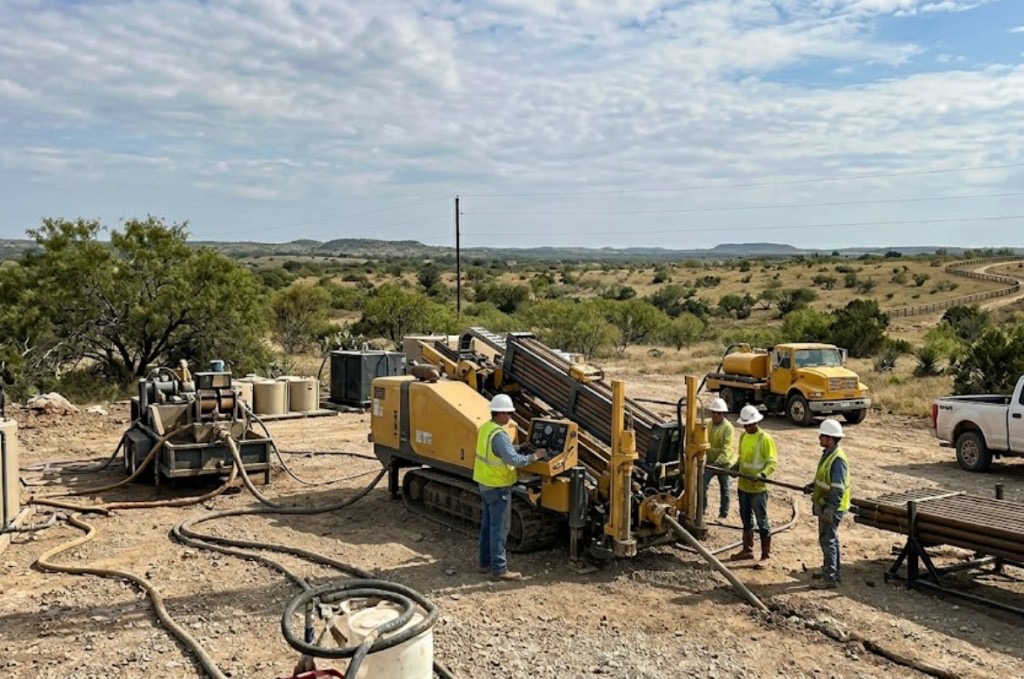
Fiber optic boring in San Antonio supports ISP backhaul, 5G small cells, and enterprise conduit along some of the fastest-growing corridors in South Texas. I-35 north expansion, US-281, and Loop 410 stack shallow CPS secondary, irrigation, and private fiber — remark tickets and hand holes at conflicts are standard, not optional.
Directional Boring Texas places HDPE duct bundles under sidewalks, medians, and Alamo Ranch landscape easements with HDD sized for conduit count — not oversized spreads that tear up retail entries. Vault ties are planned where 811 paint cannot show the full shallow utility picture.
Real Bexar County angles — not generic statewide copy.
TxDOT SA District relocations stack utilities on aging asphalt. Bore paths are walked with locate maps; potholing confirms depth at gas and electric crossings before duct pull.
Dense medical office blocks need short vault-to-pole shots without shutting patient access. Compact pits and night windows protect paving and bollards.
Multi-building campuses want redundant rings under drives and xeriscape islands. HDD links hand holes with minimal turf damage — irrigation conflicts surprise many north SA sites.
Highway widening relocations place telecom with water and electric moves. Sequencing with prime contractors avoids paths that fight lane-shift schedules.
Conduit count and bend radius define profile. Entry pits preserve curb returns and caliche-heavy ROW. Pullback bundles HDPE with swivels sized for length — abrasive limestone intervals slow some pulls west of 1604.
Edwards Limestone and Austin Chalk intervals, caliche hardpan, and karst features influence steerability and casing decisions across Bexar County.
Bexar County subsurface profiles commonly stack clay over Austin Chalk and Edwards Limestone with caliche crusts in the first few feet. Limestone can be abrasive on tooling but often stabilizes the bore better than pure clay. Karst features and voids are possible in recharge-sensitive areas — steering control and fluid loss plans matter. West toward Helotes and Boerne, hillier terrain changes entry angles and pullback loads. We adjust ream diameter conservatively when owner geotech shows rock strength above typical residential assumptions.
Hot dry summers, sudden Hill Country downpours, and occasional freeze events shape San Antonio boring schedules and restoration timing.
Summer heat in San Antonio limits crew exposure hours on open ROW — we schedule accordingly. Sudden Hill Country storms can flood low-lying entry pits near Salado and Leon Creek crossings. Rare winter freezes still drive emergency water line calls; freeze-thaw can worsen soil movement on clay sites in January and February.
City of San Antonio Transportation & Capital Improvements, Bexar County, TxDOT San Antonio District, and SAWS coordination on water/wastewater work.
City of San Antonio permits street work, drive cuts, and ROW occupancy through Transportation & Capital Improvements. SAWS may review sewer connections and manhole tie-ins. Bexar County handles unincorporated areas and some county roads. TxDOT San Antonio District governs state highway bores — plan weeks to months for approval. Edwards aquifer protection zones can trigger additional review on certain alignments; we flag that early if your plat map shows recharge or transition zones.
Trenching across retail entries and medians triggers expensive hardscape restoration. Fiber boring keeps storefronts open on Bandera, Blanco, and Medical Drive corridors.
Duct count, bore length, soil, hardscape restoration at vaults, traffic control, and permit fees in city ROW.
We review plans, bore path, access, existing utilities, and owner goals — residential repair or engineered crossing.
Texas dig law compliance: ticket, wait period, verify marks, pothole at conflicts before steel or bit enters ground.
Alignment, profile, soil expectations, permit needs, and crossing agreements for roads, rails, or waterways.
Right rig for length and diameter — mini-HDD for tight urban shots, larger spreads for long pulls and reams.
Steerable pilot, survey checks, reaming passes as required for product pipe or casing diameter.
HDPE fusion, steel casing, conduit bundles, or carrier pipe installed per spec with pullback monitoring.
Alignment records, mandrel or pressure tests where spec requires, as-built for owners and inspectors.
Minimal surface disturbance philosophy — compact entry/exit pits, restore hardscape and landscape per scope.
Depends on OD, bend radius, and ream diameter — multi-duct backhaul is common. Rock intervals may limit single-pull length.
Yes — electric conflicts are standard on arterials. Locates, remarks, and potholing at stacked utilities are in scope.
Yes — pits offset to preserve concrete except at vault ties. Master-planned communities may require restoration bonds.
Shallow stacks, Hill Country storm flooding in low ROW, and TxDOT MOT — built into schedules.
Duct count, length, rock, congestion, night work, and restoration drive price — provide path and vault locations for estimate.
24/7 — Emergency dispatch statewide. Tell us your bore path, pipe size, and city — a specialist calls or texts back with a straight answer.
Free bore estimate
Step 1 of 2 — project details first